Abhaya Hrdaya Mudra - Gesture of the Fearless Heart
Jan 22, 2026Abhaya Hrdaya Mudra Courage Rooted in the Heart
Courage, in its truest sense, isn’t about pushing harder or becoming fearless. It’s the capacity to see clearly, from the higher mind (Buddhi) act decisively, and remain anchored in the heart, even when old stories or habitual thought patterns try to keep us small.
Inside Buddhi Sangha, courage is cultivated as a quality of your inner knowing, unobstructed by past experiences that can sometimes limit our view of the right way forward.
A steadiness that allows us to recognise what is no longer true, and to move in alignment with what is.
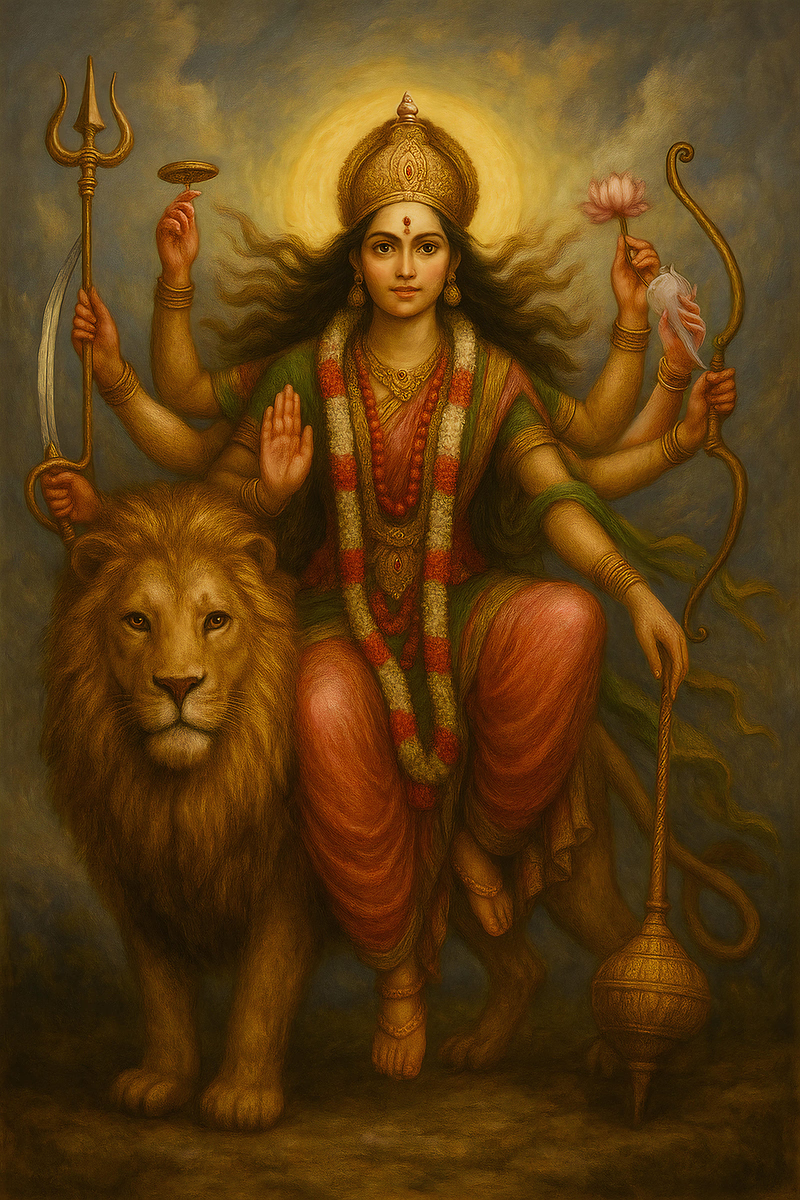
This is the quality embodied by Durga, not as something outside of us, but as an archetypal intelligence we learn to recognise within ourselves. Durga cuts through illusion and limitation, clears the inner noise that clouds discernment, and paves the way for us to uphold our dharma and live our purpose with integrity.
Durga as a Mirror for Inner Courage and Strength
Durga acts as a mirror. She reflects back our innate capacity for courage, higher mind intelligence, and right action.
Her strength is not reactive or forceful. It is precise and knowing.
She reminds us of our ability to:
- Cut through limiting belief patterns and self-doubt
- Release thought loops that fragment our energy
- Protect what is sacred within us
- Stand firmly in our values and direction
Rather than being pulled into mental noise or hesitation, Durga invites us to return to the intelligence of the heart, where choice becomes clear and action aligned.
Abhaya Hrdaya Mudra - Gesture of the Fearless Heart
One way this inner posture is embodied in practice is through Abhaya Hrdaya Mudra, the gesture of the Fearless Heart.
In Sanskrit, abhaya carries the qualities of protection, peace, and assurance, not because challenge disappears, but because inner authority is restored.
Hrdaya refers to our core or soul essence. Our spiritual heart of consciousness itself. It can also be known as our witness consciousness, the quiet centre where courage, love, and discernment naturally coexist
Practised together, Abhaya Hrdaya supports a state of inner steadiness and courage, helping us act from what we know to be true rather than from habit or doubt.
How to Practise Abhaya Hrdaya Mudra
Find a comfortable seated position.
Allow the shoulders to soften and the spine to gently rise.
- Bring the backs of the hands together
- Wrap the right index finger around the left index finger
- Wrap the right middle finger around the left middle finger
- Skip the ring fingers
- Wrap the right little finger around the left little finger
- Extend both ring fingers and both thumbs, allowing them to lightly touch and form a seal
Gently draw the mudra in so the base of the thumbs rests at the sternum — the root of the heart.
Breathe slowly and steadily. With each inhale, feel steadiness gathering at the centre.
With each exhale, allow mental distraction or doubt to soften. Remain for several breaths, noticing any shift toward clarity, composure, or resolve.
When This Mudra Can Support You
The Abhaya Hrdaya Mudra may be especially supportive when:
- Old belief patterns begin to resurface
- You are stepping into greater responsibility or visibilit
- A clear, values-based decision is needed
- You sense it's time to move forward with purpose
This is a practice of cutting through, not pushing through.
An Invitation Into Practice
The Courageous Heart Sādhana is designed to cultivate this quality of courage, the courage to meet life with discerning action, to release what limits us, and to live in alignment with our dharma.
If this teaching resonates, you’re warmly invited to explore the full Courageous Heart Sādhana, where these principles are woven into an integrated guided practice.
Frequently Asked Questions
1) What are mudras in yoga, and why are they used in meditation and practice?
Mudrās are gentle hand gestures or body positions that help guide energy and attention inward. They’re sometimes called “energetic seals” because they support steadiness, helping breath, awareness, and emotion move with less effort and distraction.
Many of us already communicate with our hands instinctively. Mudrās work with this same natural intelligence, inviting the body and mind to settle and listen more deeply.
Inside Buddhi Sangha, mudrās are woven into meditation, gentle movement, prāṇāyāma, and reflection, not as techniques to do, but as supports that help us be with experience more clearly.
2) What is Abhaya Hridaya Mudra, and what does “Courageous Heart” mean?
Abhaya means “without fear,” and Hridaya refers to the heart, but this mudrā isn’t about becoming fearless or pushing through difficulty.
Abhaya Hridaya Mudra supports courage as inner steadiness. It invites us to stay rooted in the heart while meeting life honestly, especially when things feel uncertain, tender, or challenging.
In the Courageous Heart Sādhana, this mudrā helps us recognise courage not as force or bravery, but as the capacity to remain present and discerning, even when old habits or fears arise.
Rather than opening the heart outward, this mudrā gently stabilises the heart from within, creating a sense of quiet support.
3) How does Abhaya Hridaya Mudra feel in practice, and who is it for?
People often describe this mudrā as:
- grounding and calming
- emotionally steadying
- supportive during moments of decision or transition
- helpful for settling into meditation
It can be especially supportive when you feel:
- pulled between different choices
- emotionally reactive or unsure
- called to act, but not from urgency
This mudrā doesn’t try to change what you’re feeling. Instead, it helps create the conditions for clarity and trust to emerge naturally.
4) Are there any precautions or ways to practice gently?
Yes, honouring your body is key.
- If you have wrist, hand, or shoulder sensitivity, soften the shape or rest your hands comfortably near your heart. We offer variations to this mudra inside Buddhi Sangha.
- If emotions feel strong, keep the eyes open with a soft, downward gaze and practice for shorter periods
- Let the breath remain natural; there’s no need to control or deepen it
Mudrās are contemplative supports, not medical treatments. If anything feels overwhelming, simply release the gesture and rest.
Sign Up Now
PLUS, get Angela’s signature 3-step framework for anchoring into your sacred practice — even with a full schedule and a busy mind.
We hate SPAM. We will never sell your information, for any reason.